Project Alignment
On the scanning interface, tap  to enter the project group. After selecting a project group with multiple sub-projects, you can choose to use the
  project alignment function. This function allows you to stitch the scan data from multiple project files within the current project group into a complete 3D model, improving the completeness of the scan data.
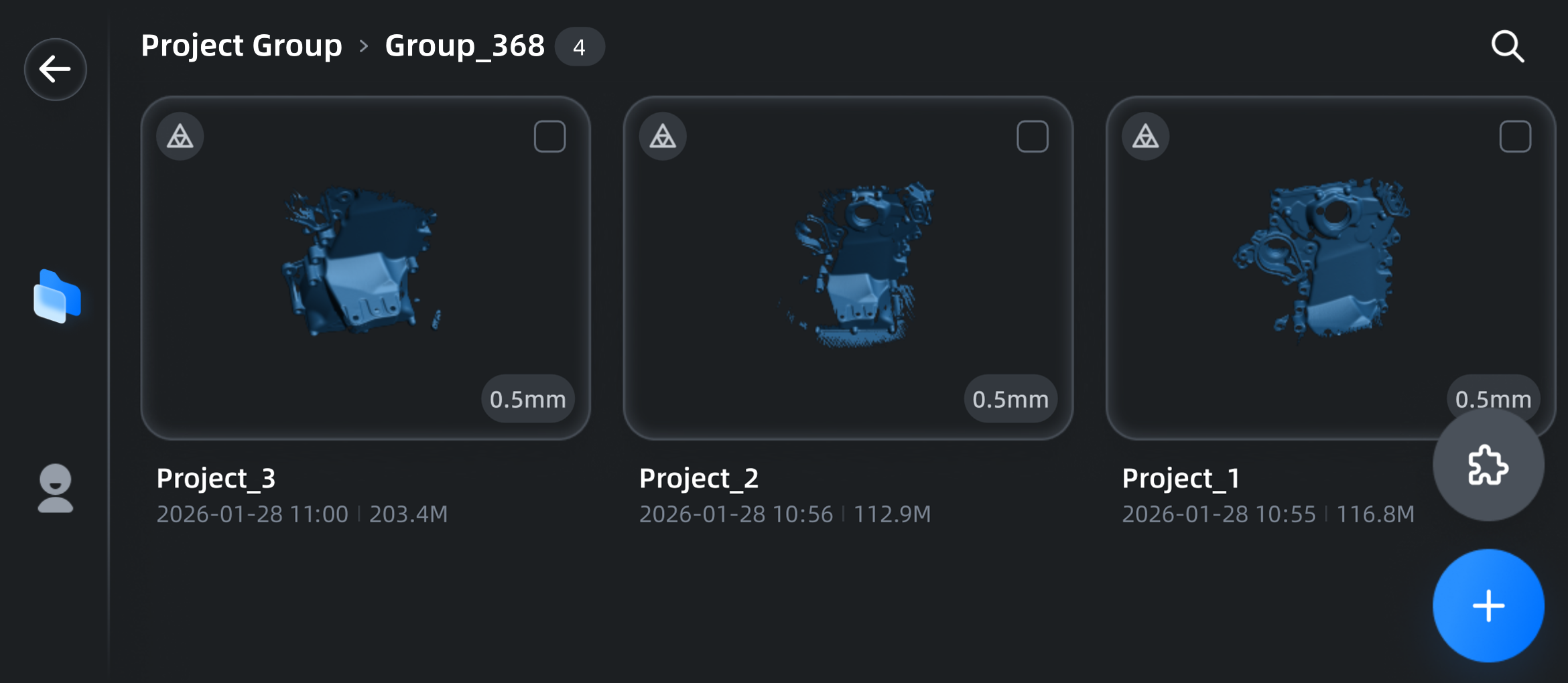
Note
- Only projects with markers and point clouds at the same time can use the project alignment function.
- Only project groups of version V1.2.1 and above support using the project alignment function for alignment.
Tap to enter the project alignment interface, where you can use either automatic marker alignment or manual marker alignment methods for project alignment.
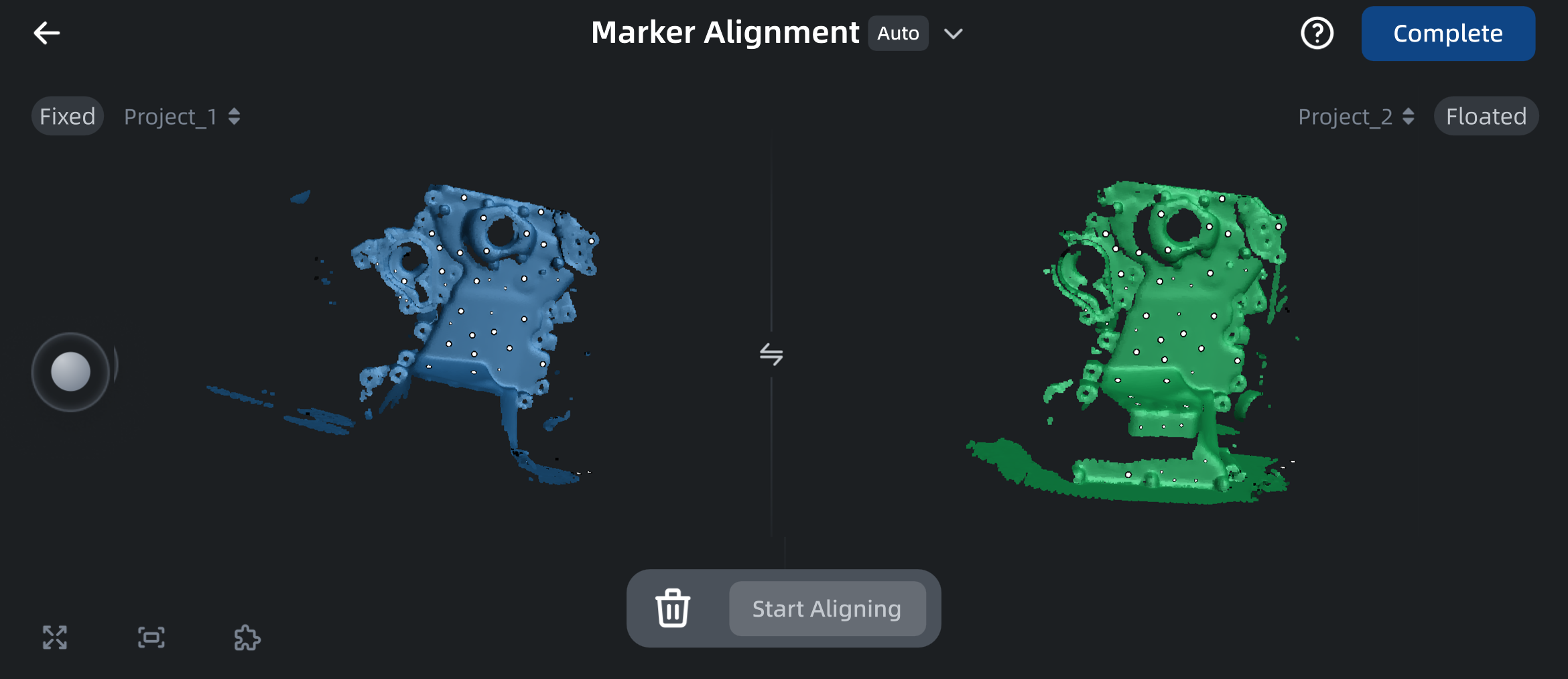
| Function | |
|---|---|
 |
Tap to view the tutorial. |
| Tap to expand the alignment method list and enable or disable Automatic Alignment. | |
 |
Tap to expand the project list and switch projects in the fixed or floating window. |
 |
Tap to swap the projects between the fixed and floating windows. |
 |
Tap to enable texture display. |
 |
Tap to zoom in on the current window. |
 |
Tap this button to restore the model to its original size and center it on the screen. |
|
In the alignment interface, tap to view the alignment structure of the current project; tap  to undo the latest alignment result. If there are multiple alignment layers, you can undo the alignment results by tapping this button multiple times. to undo the latest alignment result. If there are multiple alignment layers, you can undo the alignment results by tapping this button multiple times. |
 |
Tap to clear the currently selected projects for alignment on the interface. |
Automatic Marker Alignment
Note
- When using automatic marker alignment, ensure there are 3 or more common markers between the projects to be aligned.
- By default, automatic marker alignment is used. To use other methods, tap the on the interface to expand the alignment method selection list and disable Automatic Alignment.
-
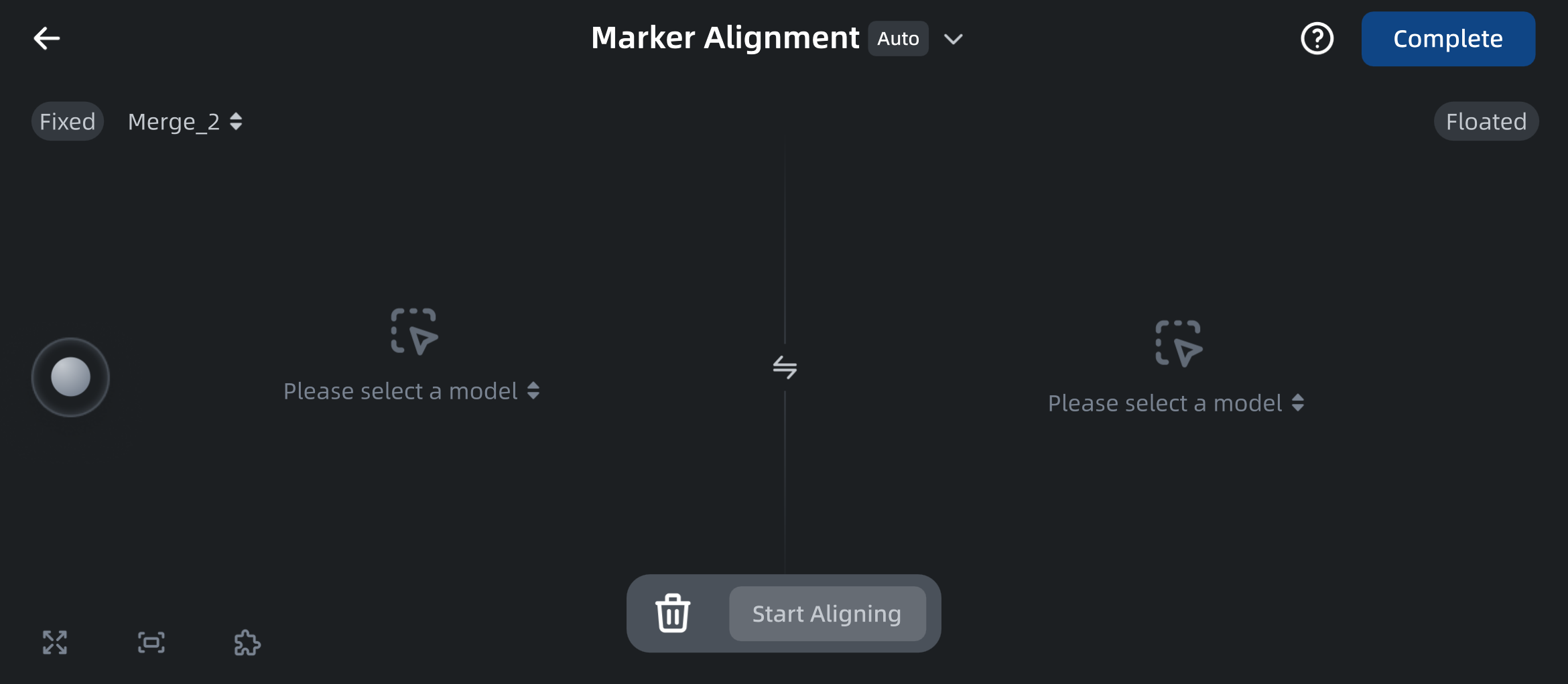
Tap on the fixed and floating windows respectively to open the project list and select the projects to be aligned.
Note
- You can perform zooming, rotating, and other operations on the fixed and floating windows of the interface to view the selected data models.
- If you need to reselect projects, tap to expand the project list for selection and replacement, or tap to clear the currently selected projects on the interface and then reselect.
-
Tap Start Alignment to begin project alignment, stitching the project from the floating window to the project in the fixed window.
-
Tap Confirm to finish this alignment and return to the alignment interface.
Note
- If there are 3 or more projects in the project group, after alignment is completed, you can repeat the above steps until all projects are aligned.
- After completing the alignment, if you need to undo the alignment effect, tap to view the aligned projects, then tap to undo.
Manual Marker Alignment
If the alignment results from automatic marker alignment are unsatisfactory, you can try using the manual marker alignment method.
-
Tap the on the interface to expand the alignment method selection list and disable Automatic Alignment.
-
Tap on the fixed and floating windows respectively to open the project list and select the projects to be aligned.
Note
You can perform zooming, rotating, and other operations on the fixed and floating windows of the interface to view the selected data models.
-
Select 3 common markers on the projects in both the fixed and floating windows.
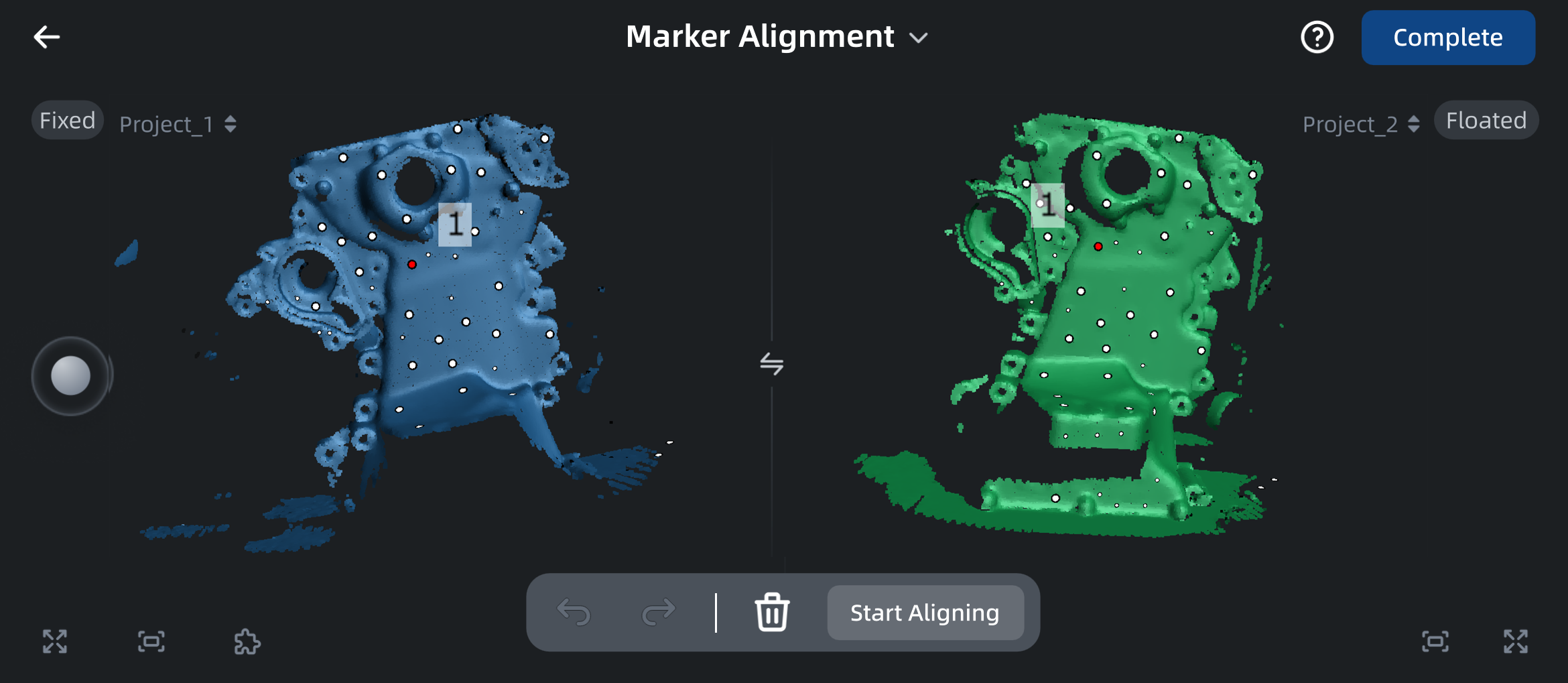
-
Tap Start Alignment to begin project alignment, stitching the project from the floating window to the project in the fixed window.
-
Tap Confirm to finish this alignment and return to the alignment interface.
Note
- If there are 3 or more projects in the project group, after alignment is completed, you can repeat the above steps until all projects are aligned.
- After completing the alignment, if you need to undo the alignment effect, tap to view the aligned projects, then tap to undo.